What is Japanese Tea?!
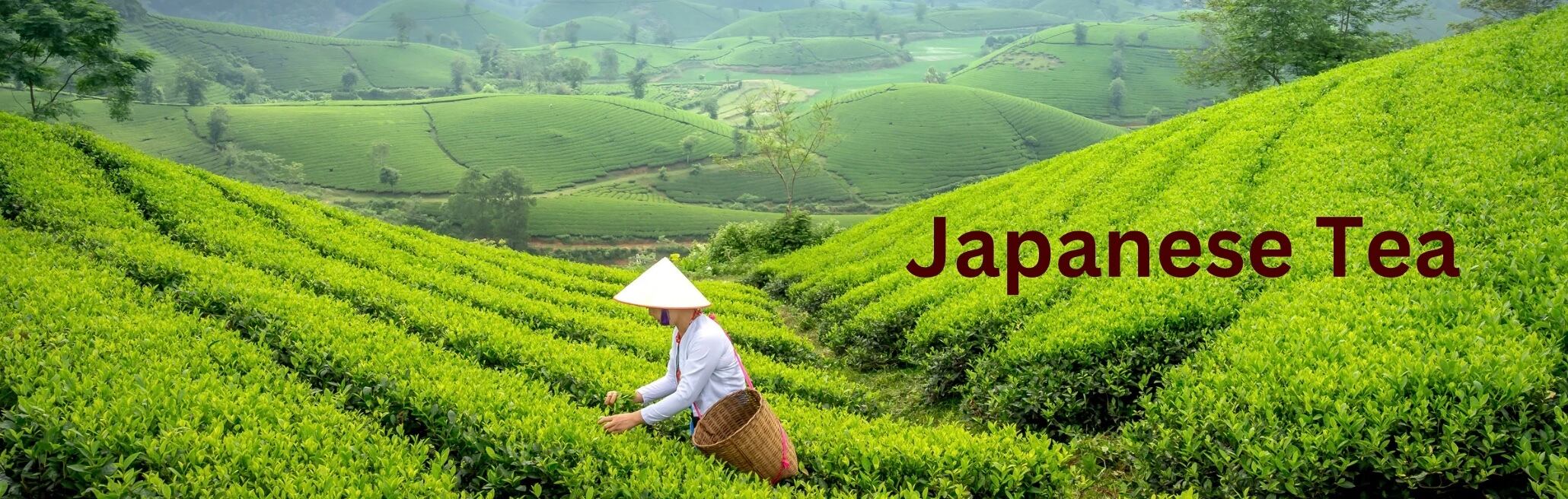
Tea is the most popular beverage in Japan and an important part of Japanese food culture. Various types of tea are widely available and consumed at any point of the day. Green tea is the most common type of tea, and when someone mentions "tea" (お茶, ocha) without specifying the type, it is green tea to which is referred. Green tea is also the central element of the tea ceremony. Among the most famous places for tea cultivation are Uji(Kyoto), Shizuoka, Kagoshima.
STU.Leverage is located in Kyoto and has Tea products from Uji.
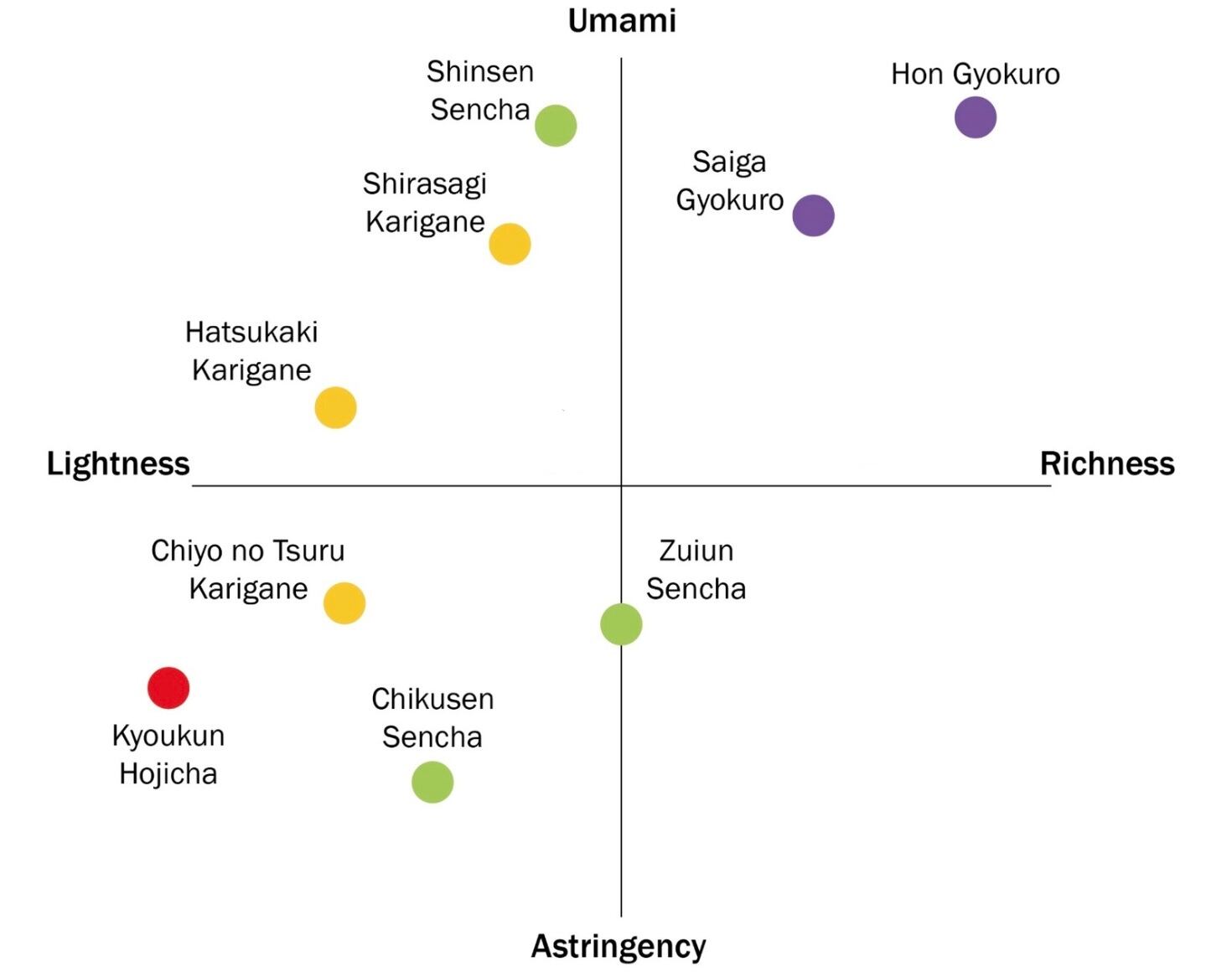
Here is the Japanese Tea Taste
Chart of our products! Please refer
to this when purchasing the products!!
5 different types of Japanese tea
Sencha (煎茶)
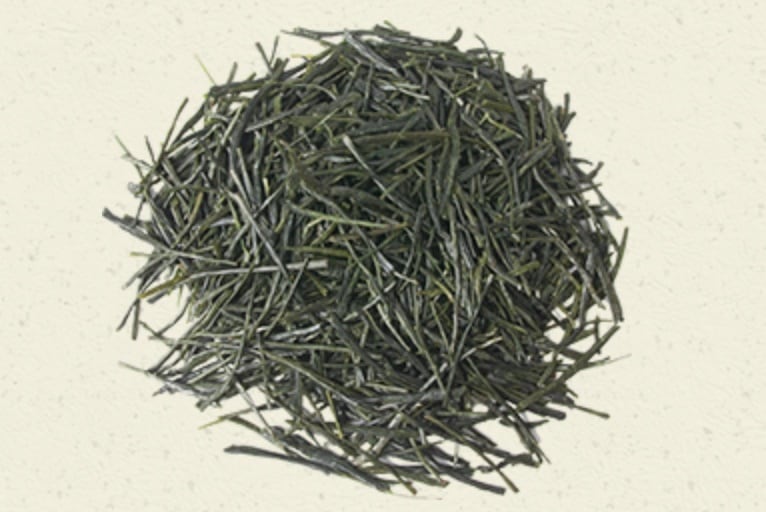
Sancha (煎茶), emblematic of Japanese tea culture, the most popular type of Japanese green tea. Accounting for about 80% of the country's total tea production. Farmers make it from the young leaves of the tea plant, which they steam, roll, and dry. Sencha's flavor is refreshing and grassy, with a hint of bitterness and a sweet finish. It is rich in antioxidants and has numerous health benefits.
There are several different grades of Sencha, ranging from the highest quality, which is known as Gyokuro (玉露), to the more common grades of Fukamushi (深蒸し, deep steaming) and Asamushi (浅蒸し, light steaming).
Traditionally, Sencha is enjoyed in Japan by brewing the leaves in a tea pot with hot water at about 70-80°C (158-176°F) for 30-60 seconds. Subseuently, they pour the tea into small cups and serve it.
Gyokuro (玉露)
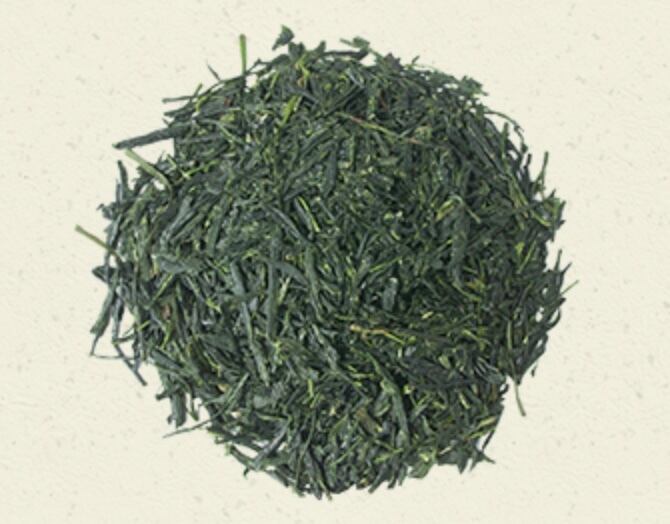
Farmers grow Gyokuro (玉露) a premium Japanese shade-grown green tea in shaded areas. This process increases the concentration of amino acids and gives it a sweeter, smoother flavor. They use the same tea leaves as sencha but is harvest them later and process differently.
They shade the tea leaves used to make gyokuro for several weeks before harvest. This process slows down their growth and increases the concentration of chlorophyll and amino acids. Then, they steam, roll, and dry the leaves like Sencha, but handle processing more meticulously to preserve its delicate flavor. Embodying the essence of Japanese tea culture.
Gyokuro has a distinctive umami flavor and a bright green color. It is one of the most expensive and sought-after Japanese teas due to its complex flavor and production process, as well as impressive health benefits.
Traditionally, people brew Gyokuro using lower water temperatures than other Japanese teas, at around 50-60°C (122-140°F) for 1-2 minutes. They can enjoy the tea on its own or pair it with delicate foods, such as sashimi or steamed seafood.
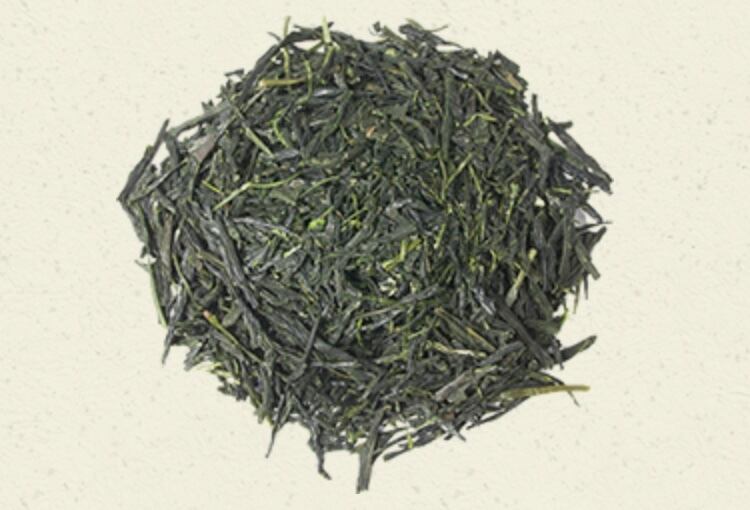
Karigane (雁金)
Karigane is made from parts of Gyokuro and Sencha (stems, leaves and powder) that are sorted during the manufacturing process. Since Karigane (Kukicha) is sorted from high grade Gyokuro or Sencha it is less expensive than the tea leaves of those main products. This is of an excellent value as it has a better flavor than tea leaves of the same price range.
Like all Gyokuro teas, Karigane has a uniquely sweet taste and aroma. Please use water around 70℃ - 80℃ (158-176°F) for 30-60 seconds.
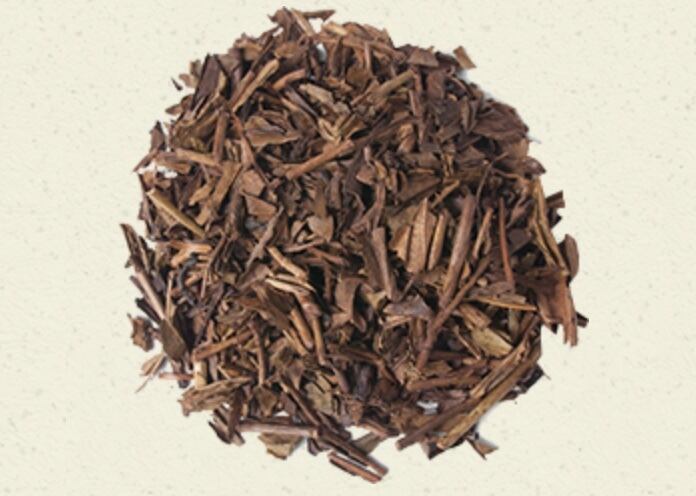
Hojicha (焙じ茶)
Hojicha is a roasted Japanese green tea that has a distinctive smoky flavor and aroma. Farmers make it from roasted stems and older leaves of the tea plant, producing a reddish-brown color and unique taste. Low in caffeine compared to other Japanese green tea, It's a popular choice for those sensitive to caffeine or who enjoy evening tea.
People typically brew Hojicha using hotter water than other Japanese teas, at around 90°C (194°F) for 30-60 seconds. They can enjoy it on its own or pair it with savory dishes, such as grilled meats or vegetables.
Kombucha (昆布茶)
Kombucha (昆布茶) is a traditional Japanese beverage made from kelp (kombu), a type of edible seaweed, rather than the fermented tea often referred to as "kombucha" in Western contexts. It has a unique, savory flavor profile and is deeply rooted in Japanese culinary and health traditions.
Western kombucha is a fermented tea made from black or green tea, sugar, and a SCOBY (symbiotic culture of bacteria and yeast). Japanese kombucha, on the other hand, involves no fermentation and is not sweet.
-
Sencha
-
Gyokuro
-
Karigane
-
Hojicha